
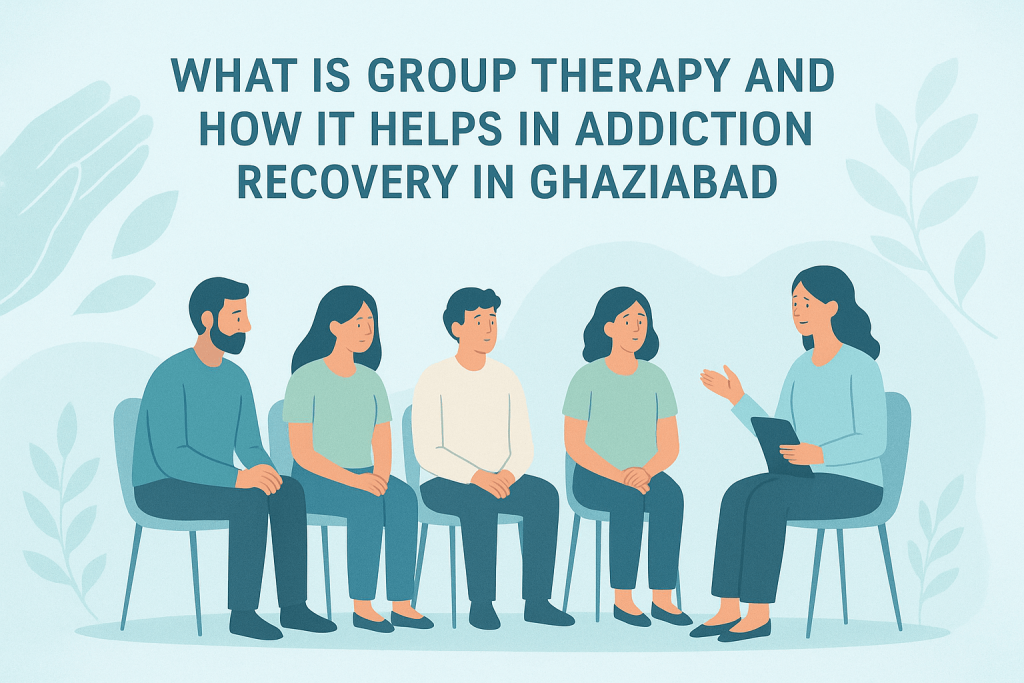
Addiction recovery is a complex journey that requires emotional strength, professional guidance, and consistent support. In Ghaziabad, the demand for structured, evidence-based treatment options is increasing as more individuals and families seek long-term recovery solutions. Among the most effective approaches used in rehabilitation centres today is group therapy.
Group therapy plays a powerful role in helping people overcome alcohol, drug, and behavioural addictions by creating a safe, supportive atmosphere where participants can share, learn, and grow together. This method encourages individuals to understand that they are not alone, that recovery is possible, and that healing can happen collectively.
This article explains what group therapy truly is, how it works, and why it has become a cornerstone of addiction recovery in Ghaziabad.
What Is Group Therapy?
Group therapy is a therapeutic approach in which a trained counsellor or psychologist conducts sessions with a small group of individuals facing similar challenges. These sessions are structured, goal-driven, and designed to help participants:
-
Share their experiences
-
Build coping skills
-
Improve communication
-
Support each other
-
Develop emotional strength
In the context of addiction recovery, group therapy focuses on helping individuals understand the root causes of their addiction, recognise negative patterns, and learn healthier ways to manage stress, cravings, and triggers.
Rehabilitation centres in Ghaziabad are increasingly using group therapy as a core part of their recovery programs because it delivers results that individual therapy alone cannot achieve.
How Group Therapy Works in Addiction Recovery
Here’s how structured group therapy helps individuals overcome addiction in Ghaziabad’s rehab centres:
1. Builds a Strong Sense of Community
Addiction often leads to isolation and loneliness. Group therapy breaks this cycle.
In a group environment, individuals meet others who are going through similar experiences. This shared sense of struggle and progress gives them:
-
Confidence
-
Motivation
-
Emotional support
In Ghaziabad, where many individuals hesitate to seek help due to social pressure, group therapy creates a safe space free of judgment.
2. Encourages Healthy Expression of Feelings
Many people battling addiction have difficulty expressing emotions or talking about their past. In group therapy, participants learn:
-
How to express feelings honestly
-
How to respond to others with empathy
-
How to communicate without fear
This emotional clarity is crucial for achieving long-term sobriety.
3. Helps Identify Patterns and Triggers
Listening to others helps individuals understand their own behaviour.
For example:
-
A participant may recognize their triggers while hearing someone else’s story.
-
Another may realise that they also use alcohol to cope with stress.
This increased self-awareness accelerates recovery.
4. Develops Key Life and Social Skills
Addiction affects decision-making, communication, and relationships.
Group therapy helps individuals learn:
-
Anger management
-
Conflict resolution
-
Stress management
-
Healthy communication
-
Problem-solving skills
These skills help individuals reintegrate into society with more confidence.
5. Offers Real-Time Feedback and Motivation
In group therapy, participants receive honest feedback from peers and therapists. This helps them understand:
-
How their behaviour affects others
-
What progress they are making
-
What areas need improvement
Seeing others succeed also motivates them to stay committed to the recovery process.
6. Reduces Shame and Stigma
Many individuals in Ghaziabad fear being judged for seeking addiction treatment.
Group therapy normalizes the recovery process.
When they hear others share their struggles, they realise:
-
They are not the only ones suffering
-
Addiction is a medical condition, not a moral failure
-
Seeking help is a sign of strength
This helps individuals open up, accept treatment, and stay consistent.
7. Helps Prevent Relapse
Group therapy teaches practical relapse-prevention strategies such as:
-
Identifying high-risk situations
-
Resisting peer pressure
-
Managing cravings
-
Maintaining discipline
-
Staying connected with support networks
This significantly reduces the chances of falling back into addiction.
8. Encourages Accountability
A major reason group therapy works so well is accountability.
Participants feel responsible not only for themselves but also for others in the group.
This sense of team responsibility encourages them to:
-
Avoid relapse
-
Attend sessions regularly
-
Work harder to stay sober
It introduces discipline and consistency into their daily life.
Why Group Therapy Works So Well in Ghaziabad
Rehab centres in Ghaziabad have found group therapy extremely effective because:
-
The city has a diverse population seeking accessible treatment.
-
Social and family pressures often prevent people from sharing openly.
-
Group therapy provides anonymity, safety, and understanding.
-
Local rehab centres combine it with medical detox, counselling, and holistic therapies.
Together, these elements create a strong foundation for lasting recovery.
Conclusion
Group therapy is one of the most effective tools for addiction recovery in Ghaziabad. It builds emotional strength, improves communication, encourages sharing, and creates a community of support where individuals can heal together.
For anyone struggling with addiction—whether alcohol, drugs, or behavioural habits—joining a guided group therapy program can be a life-changing step toward living a healthier and happier future.
FAQs
1. Is group therapy mandatory in rehab centres in Ghaziabad?
Most rehabilitation centres include group therapy as a core part of treatment, but participation is encouraged rather than forced.
2. What is the duration of a group therapy session?
Sessions usually last 45 to 90 minutes, depending on the program and therapist.
3. Is group therapy confidential?
Yes. All participants are required to maintain confidentiality to create a safe environment.
4. Can family members join group therapy sessions?
Some centres conduct family group therapy, but regular sessions are limited to participants only.
5. Does group therapy help with relapse prevention?
Absolutely. It teaches coping strategies, improves emotional control, and provides support—reducing relapse risk significantly.